
Objective
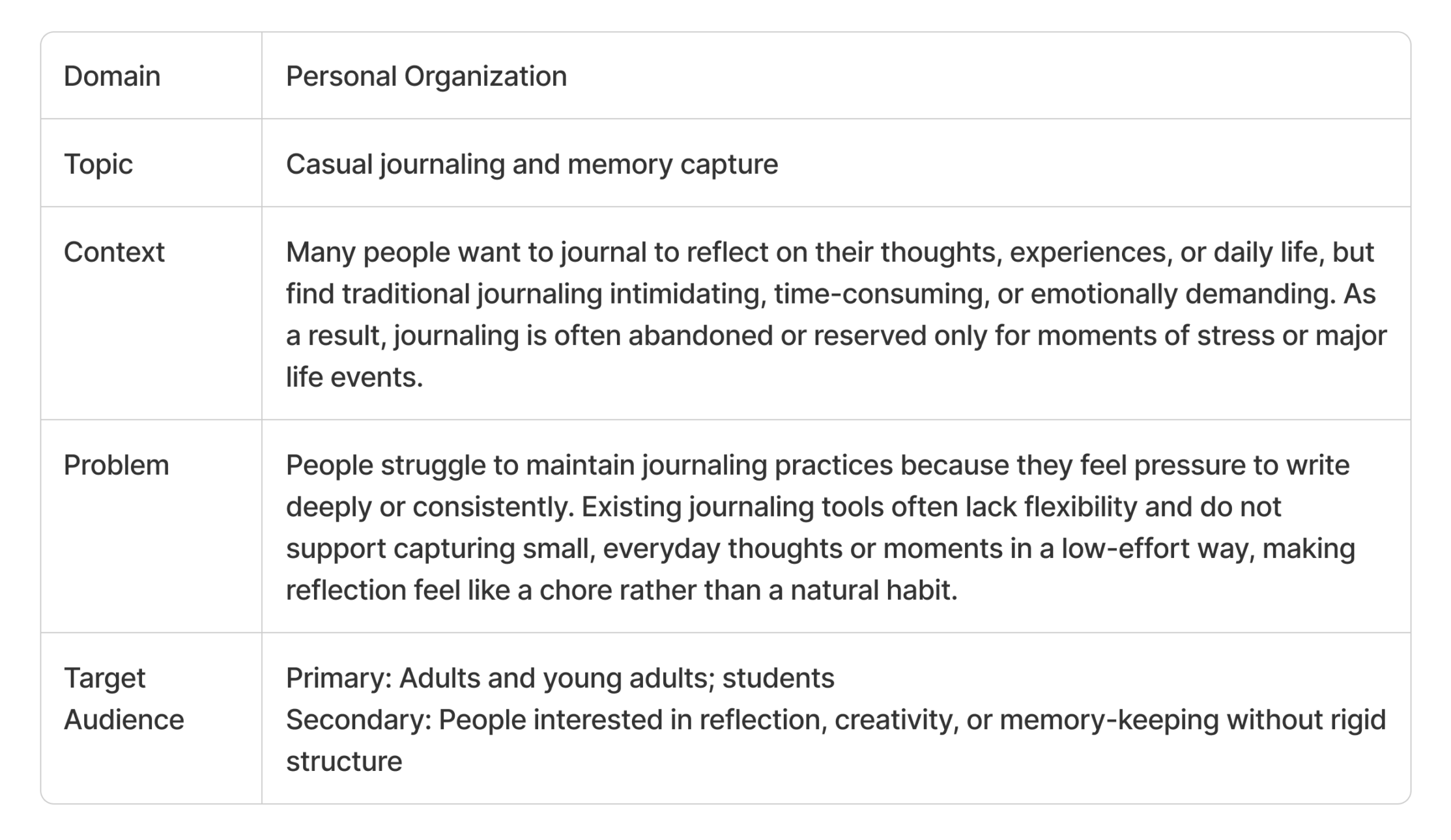
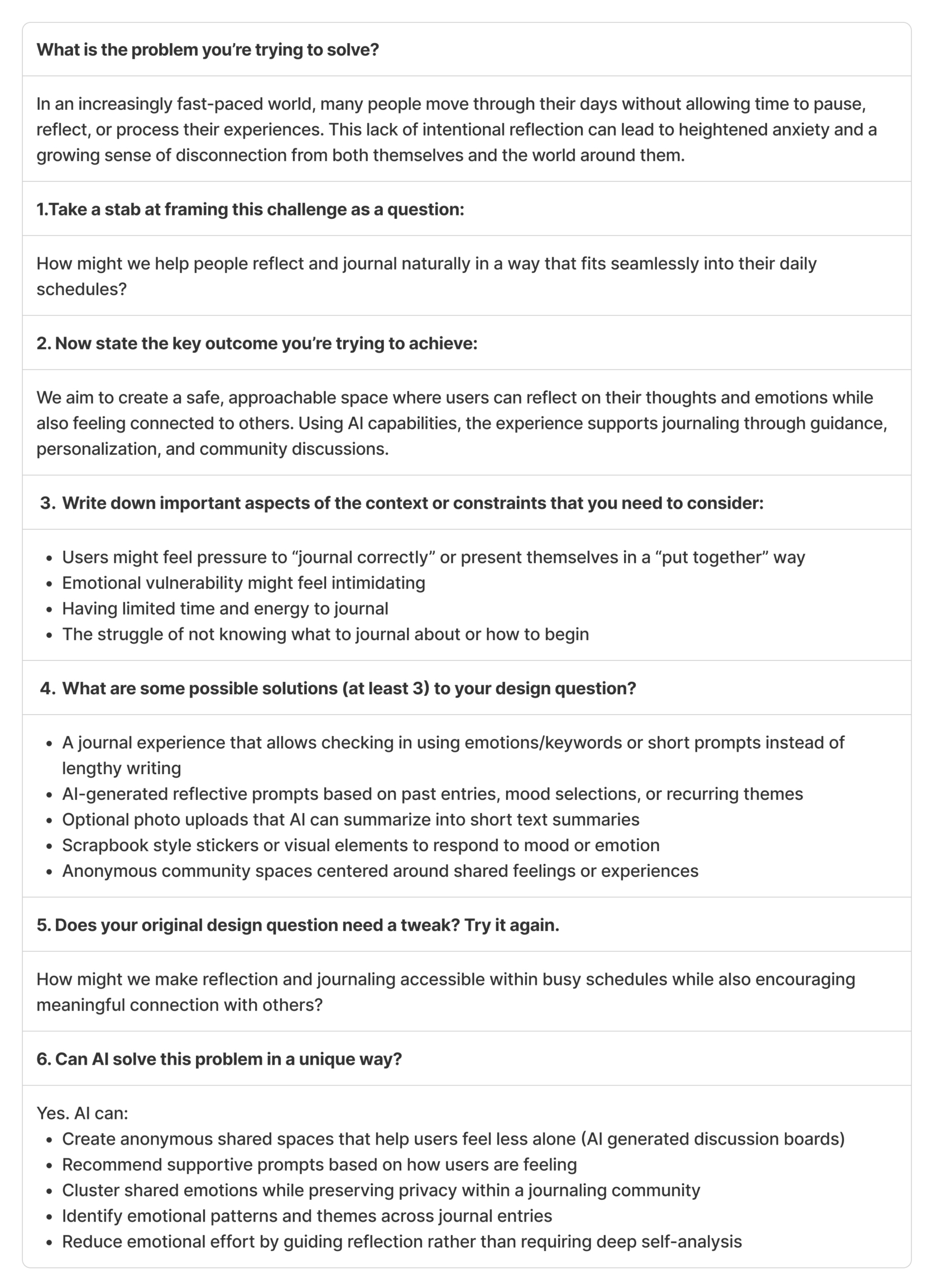
The goal of this stage was to slow down and really understand the problem before jumping into design. I wanted to learn how journaling and reflection have been approached in the past, how current digital tools support it, and where people still struggle. This helped me frame a design challenge based on real research instead of assumptions.
Problem Statement
Research Tools and Process
To conduct my secondary research, I used a mix of academic, industry, and AI-supported tools. I explored Pew Research to understand broader trends around stress, mental health, and how people engage with technology. This helped ground the problem in real data, especially for college students and young adults.
I also used dl.acm.org to find academic research related to digital journaling and AI-supported reflection. One key source was research on the MindScape app, which showed how AI-generated prompts and short check-ins can reduce the effort required to journal while still supporting emotional well-being.
To better understand and summarize academic papers, I used Typeset.io, which helped break down complex research into more digestible insights. This made it easier to connect research findings directly to design decisions.
Throughout the process, I used ChatGPT to help organize research insights, identify gaps across sources, and rewrite complex ideas in clearer, more user-friendly language. This helped me move from raw research notes to a well-framed design challenge.
Challenges
One of the main challenges was understanding in-depth academic research and translating it into achievable design insights. Many papers focused on outcomes and methods rather than user experience. I addressed this by using Typeset.io and ChatGPT to summarize and reframe findings in simpler terms that could directly inform design decisions.
Another challenge was narrowing the scope of the concept. There is a lot of research on journaling, mental health, and AI, and it was easy to get overwhelmed. I overcame this by focusing on recurring themes across sources, such as low-effort reflection, emotional accessibility, and the lack of flexibility in current tools.
Design Framing Worksheet
Reflection
This stage helped me slow down and think more intentionally about the problem before designing solutions. I realized that journaling isn’t a one-size-fits-all activity. Some days people want to write, other days they want to talk, record, or reflect quickly. Conducting secondary research helped me validate these ideas with real data and existing studies, which made my design challenge feel more grounded and meaningful.
It also helped me see how important flexibility and emotional safety are when designing for mental well-being. Framing the design challenge based on research made the project feel more purposeful and user-centered.