
AIX Design: Empathize
When beginning this project I had never imagined using ChatGPT in my creative process. Our professor had asked us to use it during this section. Specifically when we would be given the freedom to explore the potential AI could have in the making of our initial research. I had decided that I would use it in the way I would ask my questions. I’ve always had time dedicated to questions, often struggling with words and asking friends for the word I’m thinking of.
The generative AI tool I used was ChatGPT, being given premimum in order to experiment with this tool. I decided to explore asking questions for the demographic I had in mind. I kept it to just the tedious parts of the research process such as thinking of questions and what would be good topic and follow-up probes to go along with those questions.
I had overlooked each question, seeing what would fit most, what would be on topic with what we were aiming for and worked with my table mates to see what they figured would be more useful to include in our interviews or what could be tweaked.
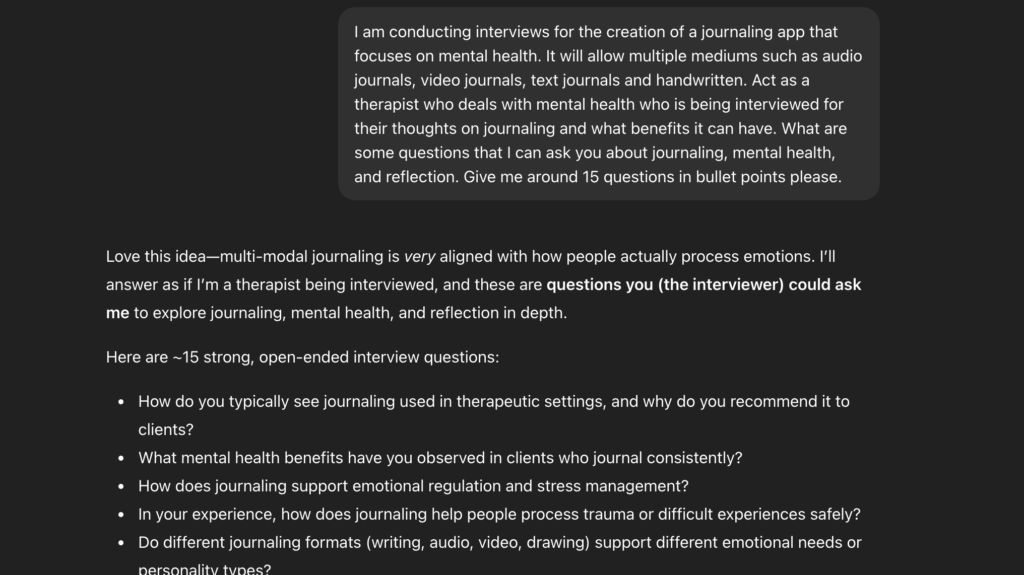
“I am conducting interviews for the creation of a journaling app that focuses on mental health. It will allow multiple mediums such as audio journals, video journals, text journals and handwritten. Act as a therapist who deals with mental health who is being interviewed for their thoughts on journaling and what benefits it can have. What are some questions that I can ask you about journaling, mental health, and reflection. Give me around 15 questions in bullet points please.”
I had given this original prompt, recieving some questions which weren’t bad, however, I found myself wanting something more organized and targeting what I had in mind in the way that was more on topic. The original questions were a good start but couldn’t dive further, especially on this more professional figure that would be recieving the questions.
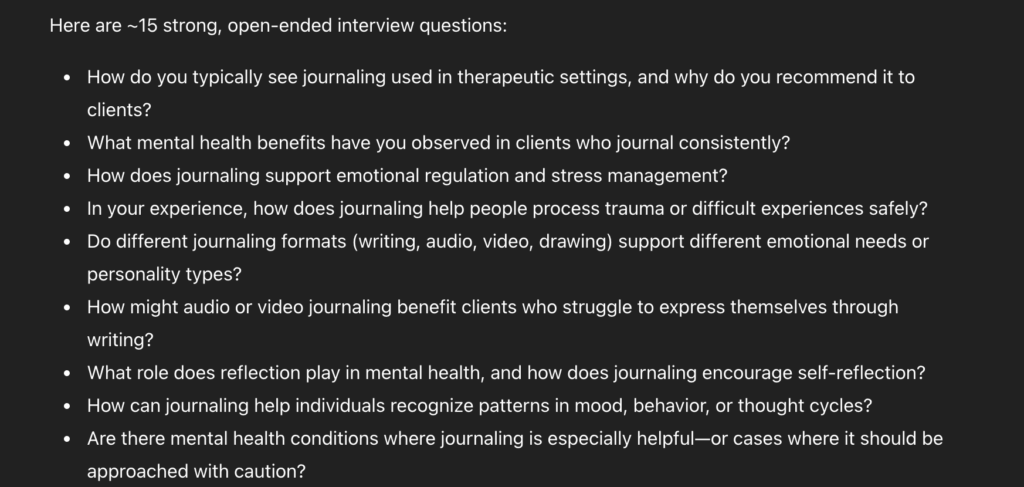
In turn, I had followed up with the next prompt, still trying to follow the formatting of asking a machine in the way it would best understand, but I was still learning.
“Can you reframe some of these questions for UX research, write follow-up probes for questions that ask about a therapeutic perspective and have the target population be college-aged students.”
As you can see, it had given me a set of questions that had not followed a more therapeutic perspective. It didn’t do it in the way I had expected at least, it did it literally, but not in the original context which meant my prompt had to be updated and worded better.
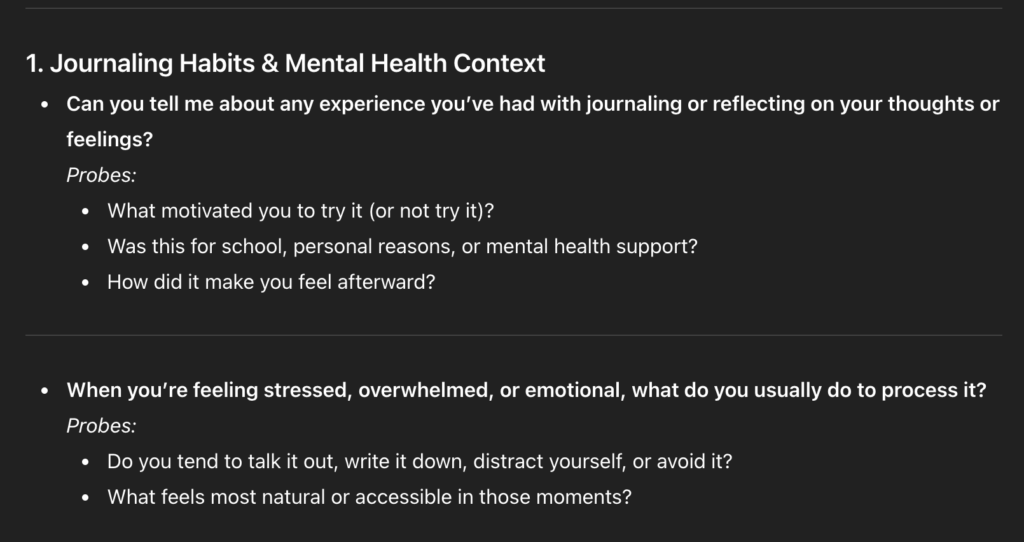
Since we had a target audience of college-aged students, I had decided to gain additional questions with the said target to see what I would get, asking:
“Could you reframe these questions to be geared to asking a therapist about the specific population of college-aged students over this app”
From there I had begun to understand what language would be more understood by the AI to provide a more accurate and useful outcome.
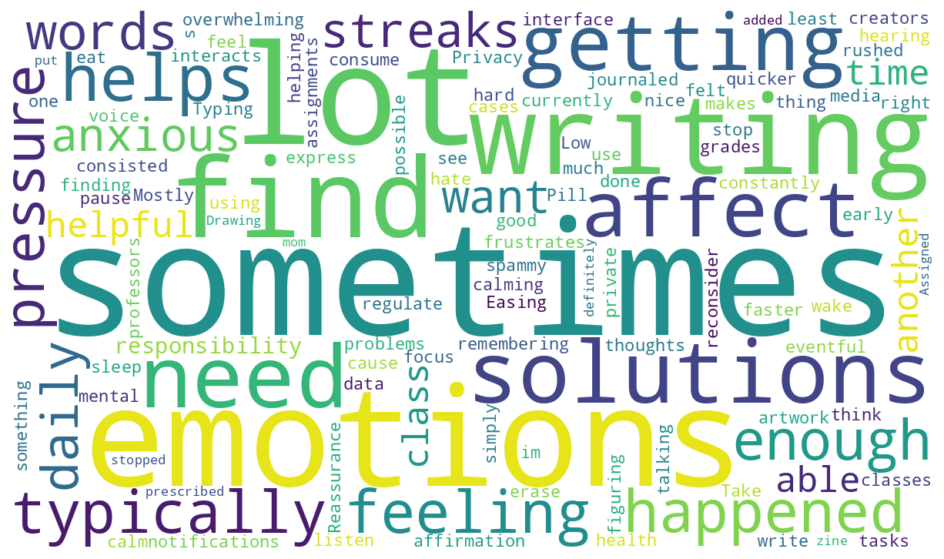
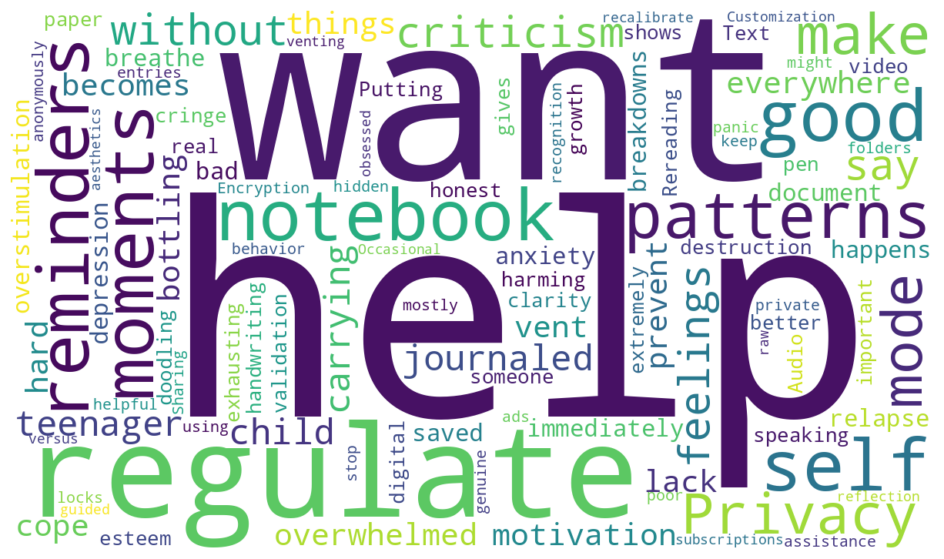
From there I conducted interviews and had received very useful information that I soon realized might be a little too much to handle all at once. That is exactly when in class we had gone over the fact that ChatGPT can create helpful summaries such as word clouds, empathy maps and thematic ideas that were common across all of the interviews.
The prompt I had started with was:
“We conducted interviews to better understand the users’ views on journaling and self-reflection. Act as a user experience researcher and analyze the interview data. I will provide you with one interview at a time. Create an empathy map in 4 quadrants based on what the participant says, feels, thinks, and does. Each quadrant should contain participants’ quotes for each category (says, feels, thinks, and does). If paraphrased, include the original quote that it came from. Let me know when you are ready.”
which had been to create the original word clouds for these interviews. I had the plan to gather all of them individually in order to then create one giant word cloud.
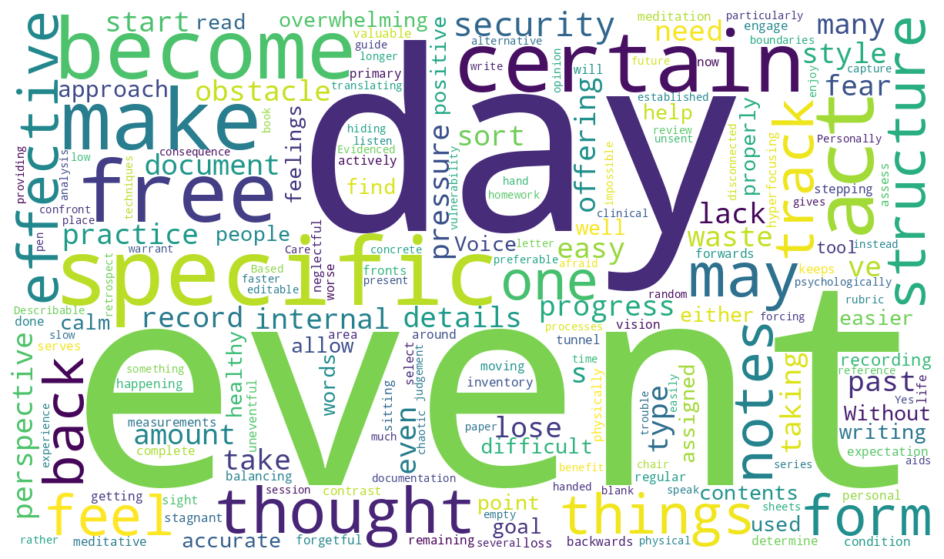
Therapist
Anxious Student
Digital Journaler
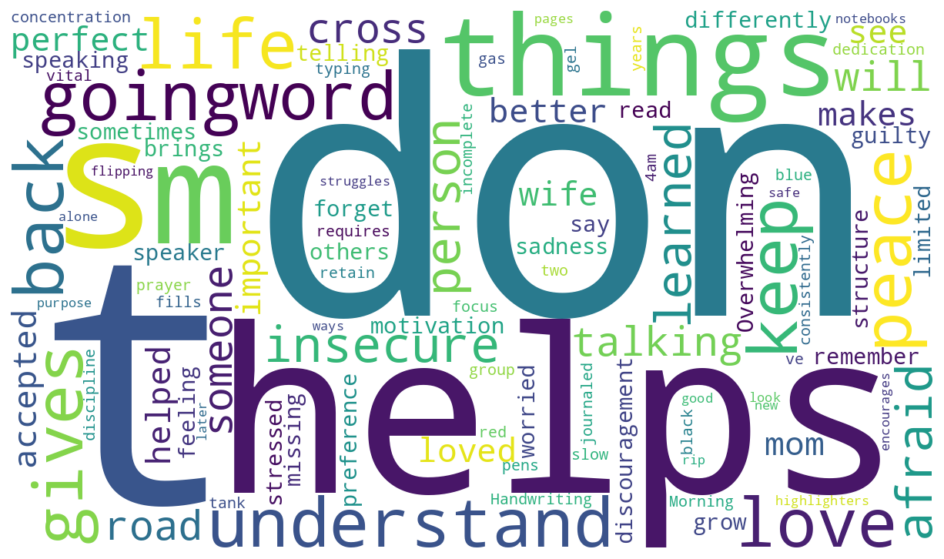
Journaling Mother
In the end, after asking:
“Can you create a combined mega word cloud of all four interviews please?”
ChatGPT was able to give me the biggest topics of the entirety of the interviews I had conducted.
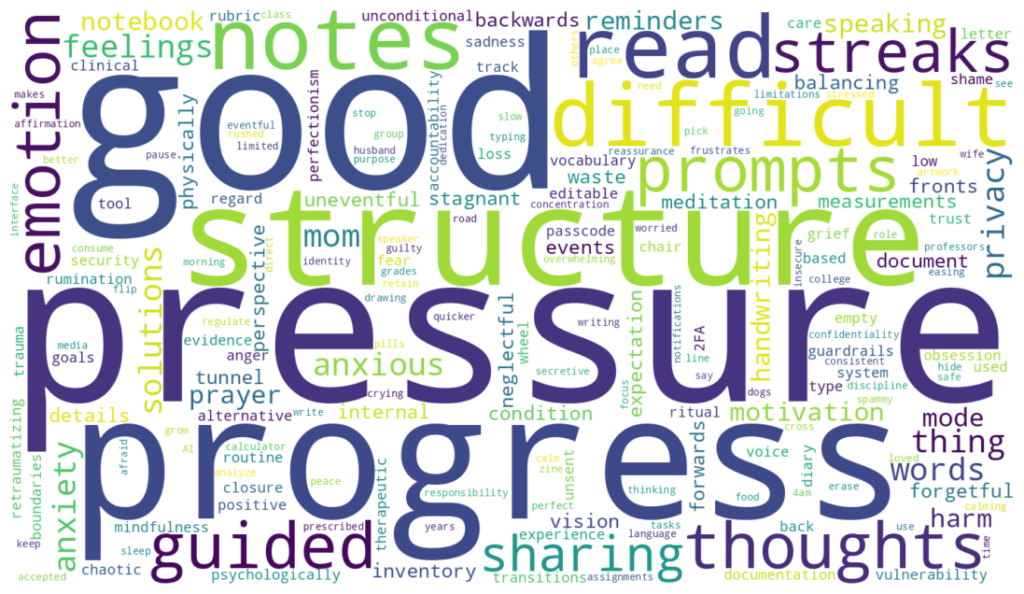
The tool was an incredible help when it came to asking for help on what questions were good to ask each demographic, even bringing up topics that I had entirely missed and forgot about, it was a very helpful tool in that sense. A challenge I had experienced was figuring out the language and finding exactly the way to fit the formula of asking the AI without overwhelming it. It had made me double think about my words, trying my best to make sure that I would get the answers I would expect.
In the end, I do see the benefits of this AI but I still think it’s so soulless. I was working and even when given the questions, given the answers, the word clouds, the empathy maps, I just stared and felt so empty. I had felt like
“Okay, I did it. Now what?”
It was helpful, it did it quick, but I didn’t feel right using it. It’s very helpful to understand how to use it, how to properly ask questions and practice for any future jobs but it’s such a stark reminder that it’s going to be replacing a lot of human work that brought people joy and all the hard work that used to be boring and tedious is missed due to it being gone. It somehow makes me miss the mundane parts of life, being grateful for what is left of being human, what little is staying nowadays.