
AIX Design: Ideate
For this phase, we had taken our findings from our Define phase to work towards the design of our app from our personas and user journey maps.
Objective
While working through the Ideate phase, our objective was to explore what our user would be doing while using our app or what situation they would go through to need our app. Exploring this need would allow us to explore what made our app useful as well.
Generative AI tools such as ChatGPT were used to assist with tasks such as generating ideas, structuring project outlines, and assisting in creating more refined written explanations. AI helped me take research insights and turn them into design concepts. We had made these supported the creation of visual frameworks such as the Creative Matrix, Storyboard descriptions, and User Flow explanations which can be explored in the Ideate phase.
AI Usage
In our work we had used ChatGPT in order to help with the following:
- Generating solution ideas from research insights
- Organizing ideas into a Creative Matrix (Through Figma Summarize)
- Creating a user flow explanation
- Refining written content for clarity and structure
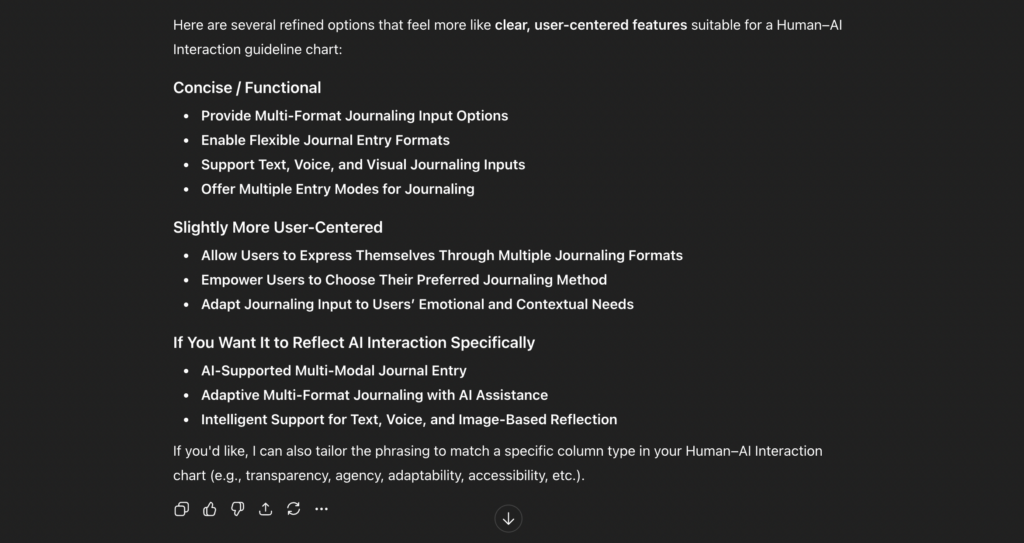
When approaching the Creative Matrix I had used this prompt to gain refinement on our feature for better wording:
How might we reword this to be a feature for a mental health journaling app as UI/UX researchers filling out a Human AI Interaction guideline chart: “Offering Multiformat Journaling Entry Options During?”
And through this prompt we had found a better wording for our feature title even if we did end up changing it in a small way. We had it as a reliable jumping point.
AI Output:
- Mood-based prompt generator to help users start writing quickly
- Optional reflection prompts that reduce blank-page anxiety
- Pause or stop journaling feature for emotional overwhelm
- Privacy-first journaling system with encryption and clear data controls
- Customizable journaling modes for different emotional states
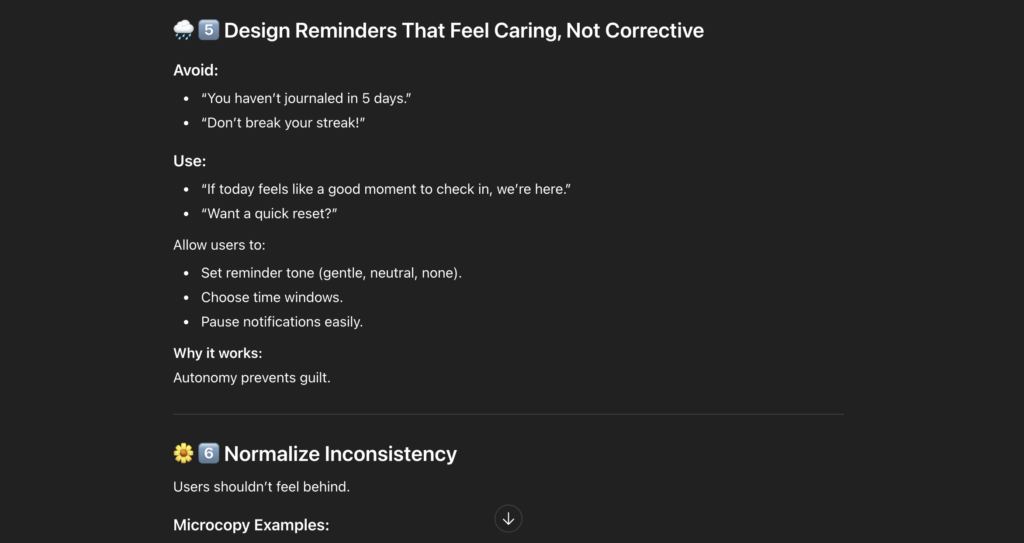
This output helped the team identify several solution directions that later appeared in the Creative Matrix. With that in mind I had also asked ChatGPT on what were possibilities for a User Flow Diagram:
“…Can you create a visual of a userflow chart that shows three app features, shows paths for a new and returning user, a typical run through of the app and where it ends.”
What I got out of the prompt was:
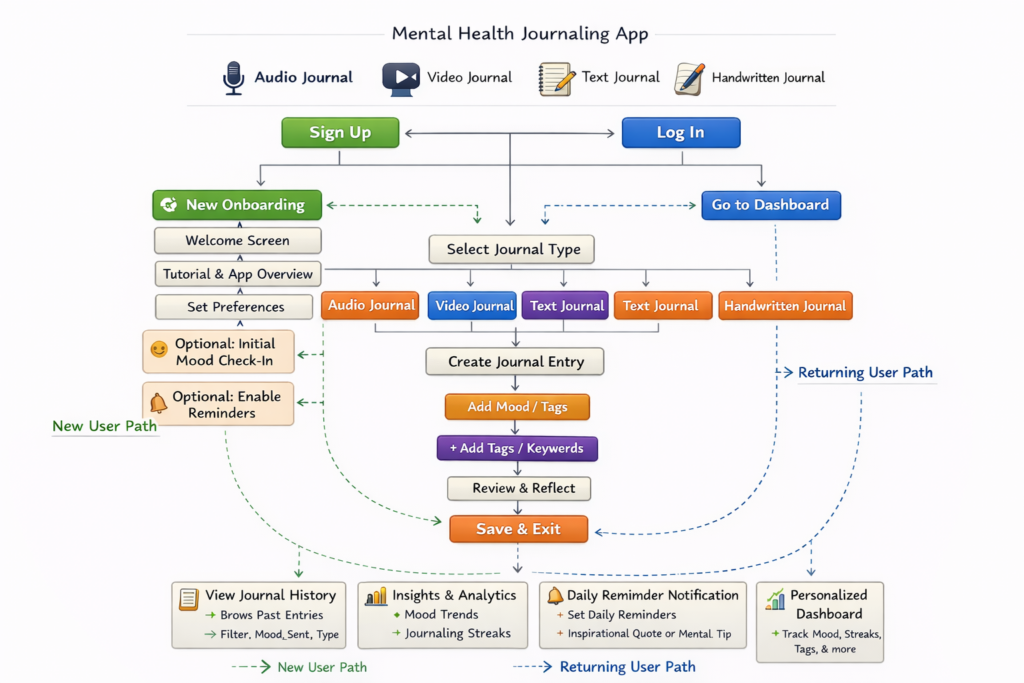
This provided multiple options while keeping the scenario simple as most of the app usage will be through the user doing a continuous entry.
Benefits Realized
Using AI during the Ideate stage provided several advantages such as providing idea generation at a much faster rate than a person, let alone our group could have come up with. AI helped generate multiple directions quickly, allowing the team to explore a wider range of ideas.
AI helped translate our insights into practical design features, organized ideas into frameworks like the Creative Matrix, helping the team systematically explore design opportunities and solution formats. Overall, AI helped refine the ideation process through refining questions asked, the content explained in each part of the design process.
Challenges Faced
Despite the benefits, challenges still happen while using AI.
AI responses depend heavily on the quality of prompts which I am still working on. When originally asking for the User Flow Diagram I had found it to be lackluster. It had looked bareboned and felt like it was missing important features.
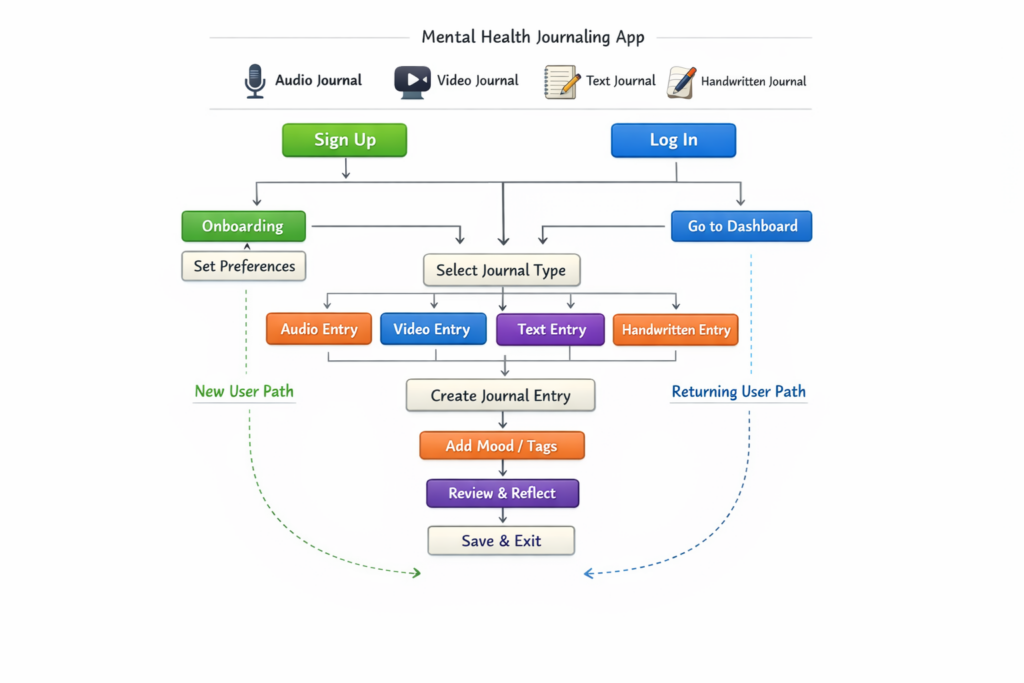
Sure, it had the idea down but didn’t seem to add in more nuanced ideas or parts that I knew needed to be added in. This brought in the possible issue of losing what the original interviews had given and giving something too broad.
Reflection
Overall, AI was a helpful tool throughout the designing process. It had helped us speed up our creation process and helped structure the more complex ideas we had in our heads and make them into clear frameworks. It had taken our ideas and built off them which was a huge assistance.
However, the process also highlighted the importance of a human review of the content. AI generated ideas quickly, sure, but the team needed to evaluate those ideas against research insights to ensure it had stayed true to the information and relevant to it. The most useful approach involved combining AI-generated suggestions with careful review and refinement before putting them into our work and considering them for any proper evaluation.
In the future, AI tools could improve by offering stronger connections between research data and ideation suggestions since it seemed to go too far into a different direction or take us on too broad of an idea when trying to focus on our insights. For example, an AI system that analyzes interview transcripts and highlights recurring design opportunities could further strengthen the ideation process.
Overall, AI worked best as a support tool for creativity and organization, rather than as a replacement for human-centered design thinking.